2024
Company
Webel
Role
Product Designer
Product Manager
Platform
Desktop
Scope
B2B
Design end-to-end
The challenge
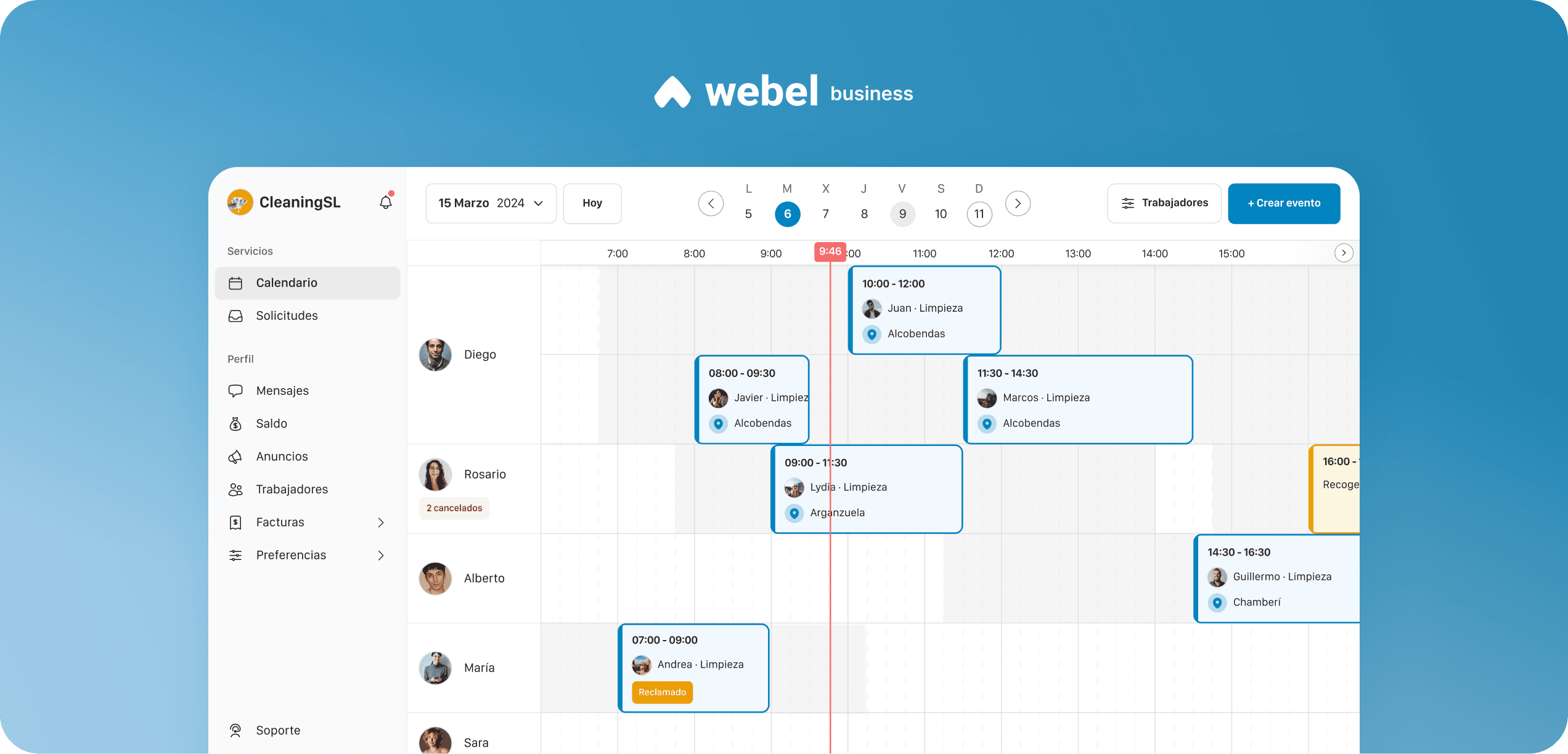
Webel was originally designed as a marketplace for individual service providers. Availability and booking logic were built around a single worker model: once a request was accepted, the time slot was automatically blocked in the professional’s calendar.
However, this logic created a critical limitation for companies operating on the platform. Unlike individual providers, businesses had multiple workers and operational capacity beyond a single person.
How might we redesign the availability experience to support company operations while maintaining a simple booking flow for individual professionals?
Discovery

business
During the early exploration of Webel Business, I worked closely with the support team and conducted interviews with company clients to understand their operational challenges.
We identified availability as the main barrier to growth.
Because the platform treated companies as single providers:
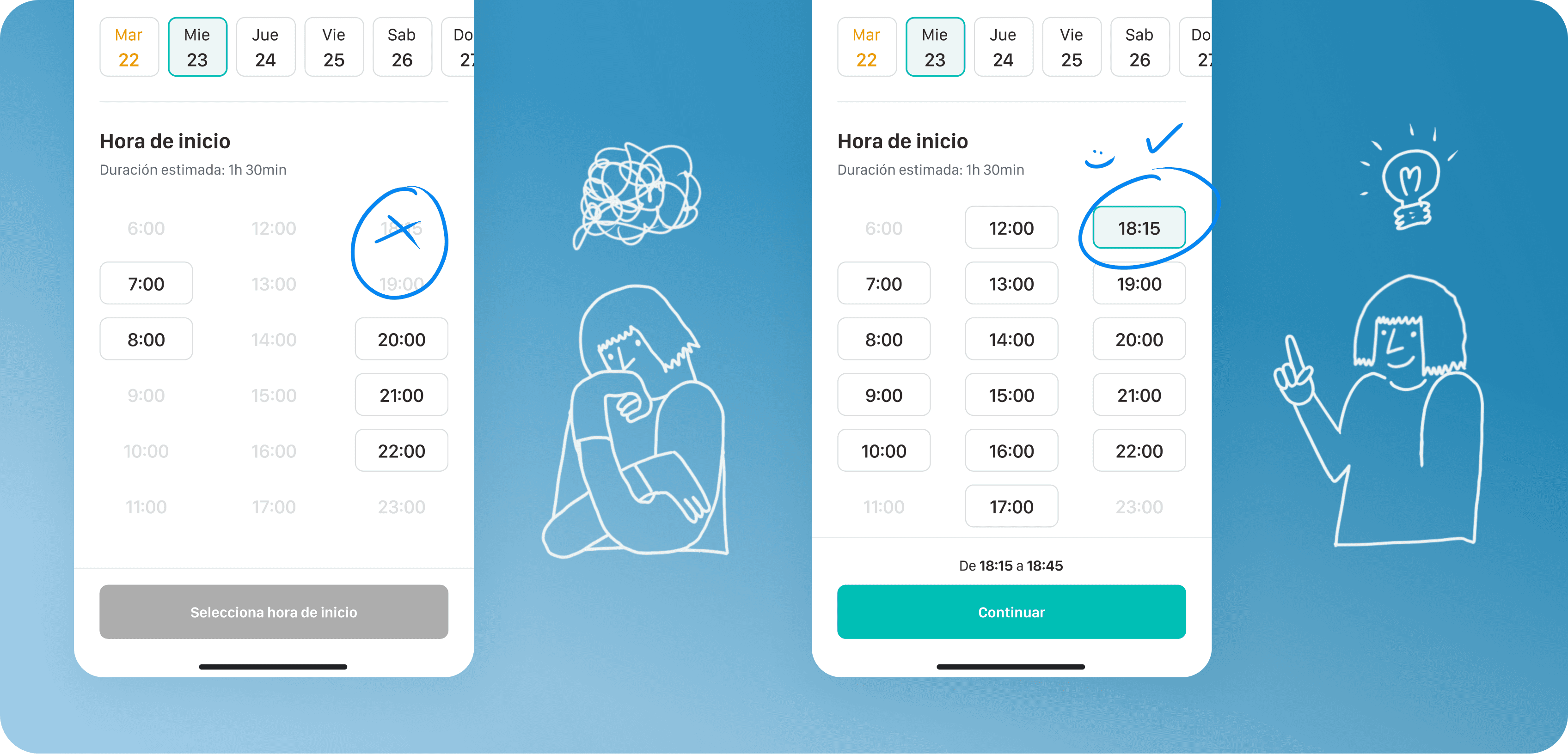
When a client booked one worker, the entire company appeared unavailable.
Businesses could not showcase their real capacity.
Many clients made decisions based on availability, which meant companies were frequently excluded from discovery.
Company profiles depended heavily on clients contacting them directly to ask about availability.
This led to ad-hoc proposals instead of scalable booking.
As a result, companies struggled to capture one-shot customers who were ready to book instantly.
Key insight
Availability is not just a scheduling feature. It is a core discovery and growth driver in marketplace environments.
This reframed the problem from “adding B2B features” to redesigning the availability system.
Design principles
Availability drives competition
Scalability over simplicity
Accurate and reliable
Operational flexibility
Solution
I designed a new availability model tailored to company workflows while preserving the simplicity of the existing booking experience.
Multi-worker availability
Companies could manage availability across multiple workers instead of a single calendar.
Capacity-based scheduling
Time slots were no longer blocked globally when one worker was booked.
Flexible operational control
Companies could define capacity rules and availability logic.
Improved discovery
Company profiles surfaced in real-time search results based on actual availability.
Scalable booking
Enabled instant bookings for one-shot customers without manual coordination.
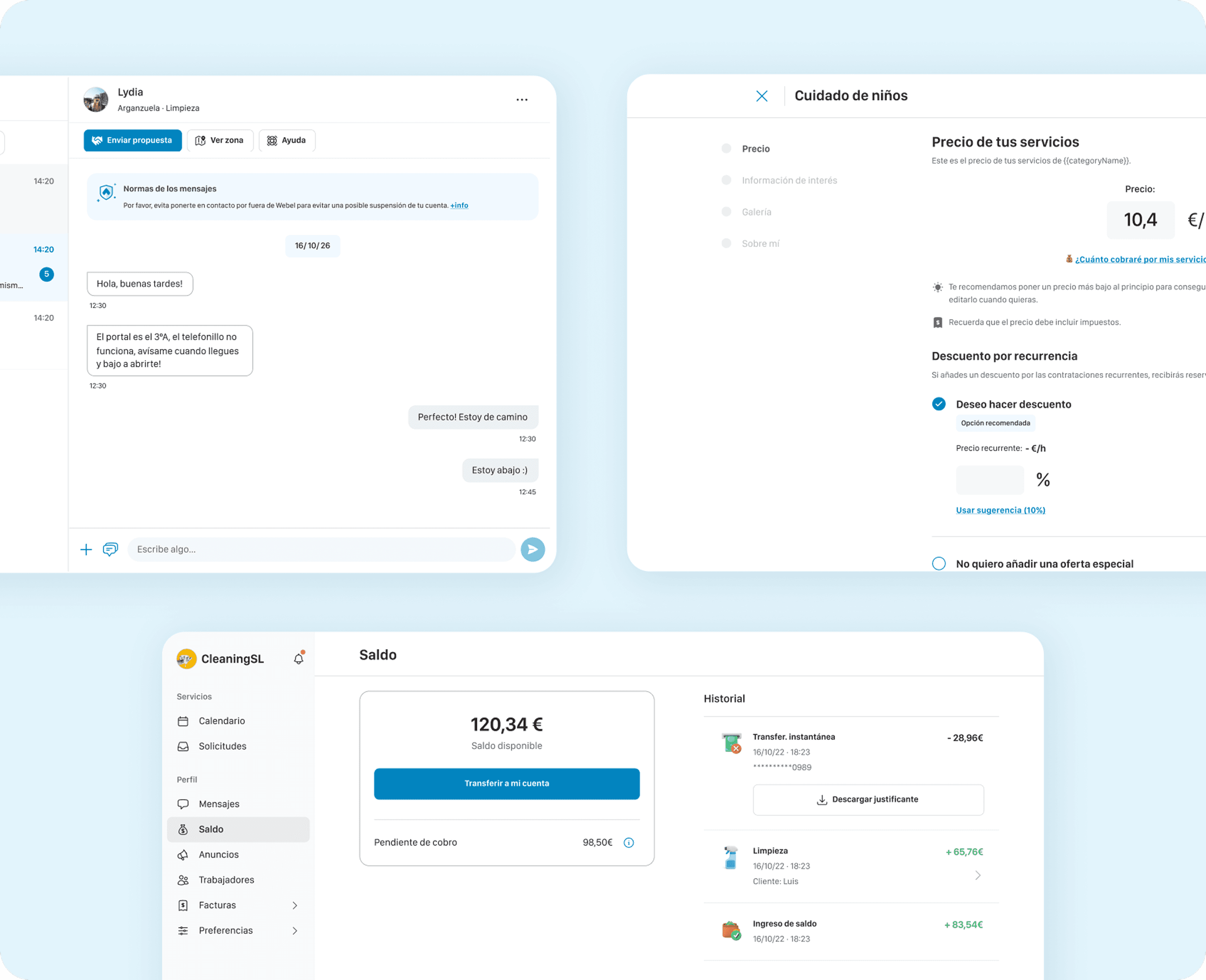
Of course, it needed to include most of the features available to individual professionals in the mobile app, but only those that were truly essential for an MVP. Ship, ship, ship!
Impact




What I’d do differently
Earlier experimentation with capacity models
Testing different capacity representations earlier could have accelerated learning.
Mobile first
We prioritized a desktop-first approach based on early research with business clients. However, this did not reflect the needs of individual professionals who later transitioned into business accounts. This made the mobile adaptation more complex than expected. In hindsight, I would have considered a more mobile-aware strategy from the start.
Automation and integrations
Integrating with external scheduling and workforce tools could unlock further scalability.
Check other projects